Video · 21 November 2026 · 7 min read
They Called Docklands Melbourne's Ghost Town. Here's What Happened Next
Docklands rents are up 83% since 2021 while unit prices sit flat. The people, jobs, projects and supply data behind Melbourne’s "ghost town" in 2026.
By Han Dol Kim, Director, Solomon Bloom
For years the headlines called Docklands Melbourne's ghost town. Big glass towers, windy streets, a giant wheel that stopped turning. That story stuck.
But here is the number that doesn't fit it. In June 2021 the median rent in Docklands was $400 a week. By June 2026 it was $730. That is a rise of 83% (Homes Victoria Rental Report, moving annual median rent, all dwellings).
At the same time, the price of a Docklands apartment has gone almost nowhere. Rent up, price flat. Both are true. In this article, based on my latest video, I go through why the ghost-town name stuck, what changed underneath it, and the one number I would watch before buying anywhere near the water.
Where Docklands is, and how it was built
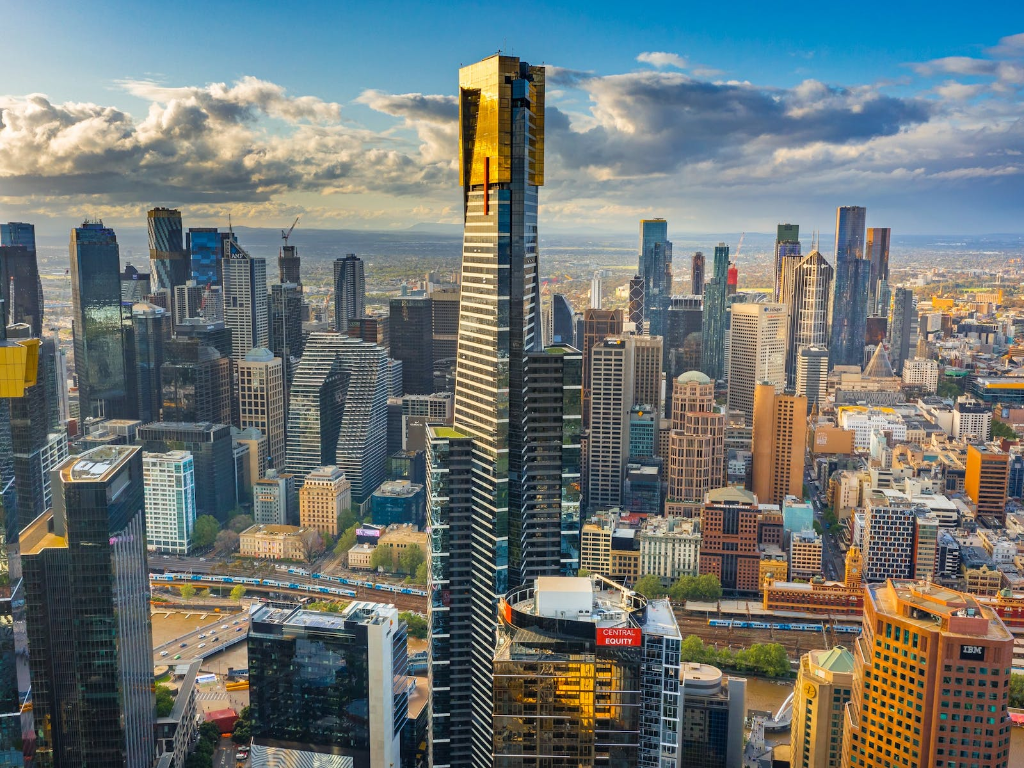
Docklands sits right next door to Melbourne's CBD, on the water. The precinct is about 190 hectares, and nearly a quarter of that is water. It has 7 km of waterfront, and the whole area is inside the free tram zone (Development Victoria).
Thirty-five years ago it was none of that. It was old port land: rail yards, empty sheds and dead docks.
- 1991: the state set up the Docklands Authority to rebuild the area from scratch (eMelbourne).
- 2000: the stadium opened.
- Around 2002: the first residents moved in.
- 2007: Docklands became part of the City of Melbourne.
Why the "ghost town" name stuck
There is a reason for the name, and it is a fair one. Docklands was built towers first, people later. Big glass buildings, wide windy streets, not many shops, and not much to do after 6 pm.
Even the council said so. In 2008 a City of Melbourne report criticised the place: not enough transport, wind tunnels between the towers, not enough green space, not enough community.
Then came the wheel. The observation wheel opened at the end of 2008. About 40 days later cracks were found and it stopped. For a lot of Melburnians it became the symbol of Docklands: big money, big promise, standing still.
In 2017 Time Out was still asking whether Docklands could be saved. Costco, which opened its first Australian store there, later moved out to the west. And to be fair, the offices still aren't full: about one in five office floors in Docklands is empty (Property Council of Australia, Office Market Report).
So that is the story everyone knows. But it is only half of it.
What changed: the people came
While the headlines stayed the same, the people kept coming.
- Population: about 11,800 people lived in Docklands in 2016. By June 2025 it was over 19,000, which is 62% more in nine years (ABS Regional Population, estimated resident population).
- Income: household income is about $130,000, around 46% above the City of Melbourne average (Urbis, Feb 2025).
- Age and tenure: the median age is 32, and nearly 7 in 10 households rent (ABS Census 2021, via PropTrack).
- Schools: Docklands Primary opened in 2021 with 200 students, and in 2026 the state funded land for a second campus (Premier of Victoria; Docklands News). You don't build a second school in a ghost town.
Who works in Docklands
About 73,000 people work in Docklands (Victorian Government, Docklands Precinct, Oct 2026). That is roughly four workers for every resident. NAB, ANZ, the AFL, Medibank and a film studio are all on one waterfront.
And the city around it keeps growing. Greater Melbourne added about 105,000 people in a single year (ABS Regional Population, year to June 2025).
The rent signal
This is the chart that changes the story. All figures are Homes Victoria moving annual median rents for Docklands:
- June 2016: $530 a week
- June 2021: $400 a week (the COVID low)
- June 2025: $700 a week
- June 2026: $730 a week
A two-bedroom flat went from $450 to $800 a week over the same 2021 to 2026 period. That is not a ghost town. That is a queue.
What has actually been built in the last two years
Not promised. Finished.
- March 2024: a $225 million upgrade of Marvel Stadium, with new plazas on the city side (Premier of Victoria).
- June 2025: Seafarers Rest opens on the river, the first new riverfront park in Melbourne in 20 years (Docklands News).
- October 2025: the Wurundjeri Way extension opens. It is 1.5 km, toll-free, a direct road into Docklands, and the first new CBD bypass in a quarter of a century (Big Build / Premier of Victoria).
- December 2025: the West Gate Tunnel opens, giving traffic from the west its own way in. It carried a million trips in under eight weeks (Premier of Victoria / Big Build).
- 2026: after an $11 million overhaul, the Melbourne Star wheel is turning again (Ausleisure, Oct 2026).
What is approved next
Zoom in on one spot: the old AFL House site on Harbour Esplanade. It is about two hectares right on the water, approved for three towers of 129 m, 113 m and 90 m, with over 180,000 square metres of homes, offices and shops (Amendment C438melb, Aug 2024, via The Urban Developer).
The Victorian Government says Docklands has attracted $14.6 billion of private investment and is only about 70% built (Victorian Government, Docklands Precinct, updated 29 Oct 2026). That means about 30% is still to come.
The honest part: prices
With all that, you would expect prices to be flying. They aren't, and this is the part most videos skip.
- REIV: median Docklands unit around $575,000 (Nov 2026).
- PropTrack: $580,000, zero change in a year (via Jellis Craig, Sep 2026).
- Cotality: down about 8% over 12 months (data to Aug 2026).
Across the whole City of Melbourne, unit values are still below where they were in 2017 (Cotality). For comparison, the median Melbourne unit is about $640,000 and the median Sydney unit about $899,000 (Charter Keck Cramer, Jul 2026).
So rents are behaving like a boom, while prices are still priced like the ghost-town story. When rent goes up and price doesn't, the yield goes up. Docklands units are yielding around 6.3% gross, against 4.8% for metropolitan Melbourne (REIV, Nov 2026).
That doesn't mean everything is perfect. Offices are still emptier than in the CBD, and nobody can tell you when prices will turn. But the rent is real money, paid every week, and it is on the public record.
Why prices could catch up: supply
One word: supply.
- Inner Melbourne finished only about 2,000 new apartments in 2025, a 10-year low (JLL).
- Melbourne needs about 12,000 to 15,000 new apartments a year, and the forecast is about 9,000 (Charter Keck Cramer, State of the Market H1 2026).
- The council's forecast has Docklands growing to about 31,000 residents by 2043 (SGS Economics for the City of Melbourne, Forecasts 2023 to 2043).
More people, fewer new homes, rents already rising. That is the squeeze.
My rule: watch the rent, not the headlines
Remember the number from the start: rent up 83%. That is the market telling you something before the price does. It is how Melbourne's "ghost town" ended up with one of the fastest rent rises in the city while prices stood still.
If you are looking to buy in a growth area, first home or investment, from Singapore or here in Melbourne, send us a message through solomonbloom.com and we will show you the numbers for that exact street.
Watch the video
The full story, with maps, charts and drone footage of Docklands today, is in the video above: "They Called It Melbourne's Ghost Town. Look What Happened." on the Solomon Bloom YouTube channel.
FAQ
Is Docklands still a ghost town in 2026?
The data says no. More than 19,000 people live there (ABS, June 2025), about 73,000 work there (Victorian Government, Oct 2026), and median rent rose from $400 to $730 a week between June 2021 and June 2026 (Homes Victoria). Office vacancy is still high, at about one in five floors.
Have Docklands apartment prices gone up?
Not much. The REIV puts the median unit around $575,000, PropTrack has it flat over a year, and Cotality shows a fall of about 8% over 12 months. The growth has been in rents, not prices.
What rental yield do Docklands apartments get?
Around 6.3% gross for units, against 4.8% for metropolitan Melbourne (REIV, Nov 2026). Gross yield is before costs such as owners corporation fees, rates and management.
Is Docklands a good investment?
That depends on the building, the price and your goals. The video shows rising rents, high yields, recent infrastructure and a tight apartment supply pipeline, but also flat prices and high office vacancy. Nobody can tell you when prices will turn.
How far is Docklands from the Melbourne CBD?
It is right next door, on the western edge of the CBD, and the whole precinct is inside the free tram zone.
General information only, not financial advice. Past performance is not a guide to future performance, and forecasts are third-party estimates.