Tax · 24 November 2026 · 8 min read
Australian Property Tax for Foreign Investors: A 2026 Guide for Singaporeans
Australian property tax for foreign investors in 2026: rental income, non-resident tax rates, CGT on sale, 15% withholding and what Singapore taxes.
By Han Dol Kim, Director, Solomon Bloom
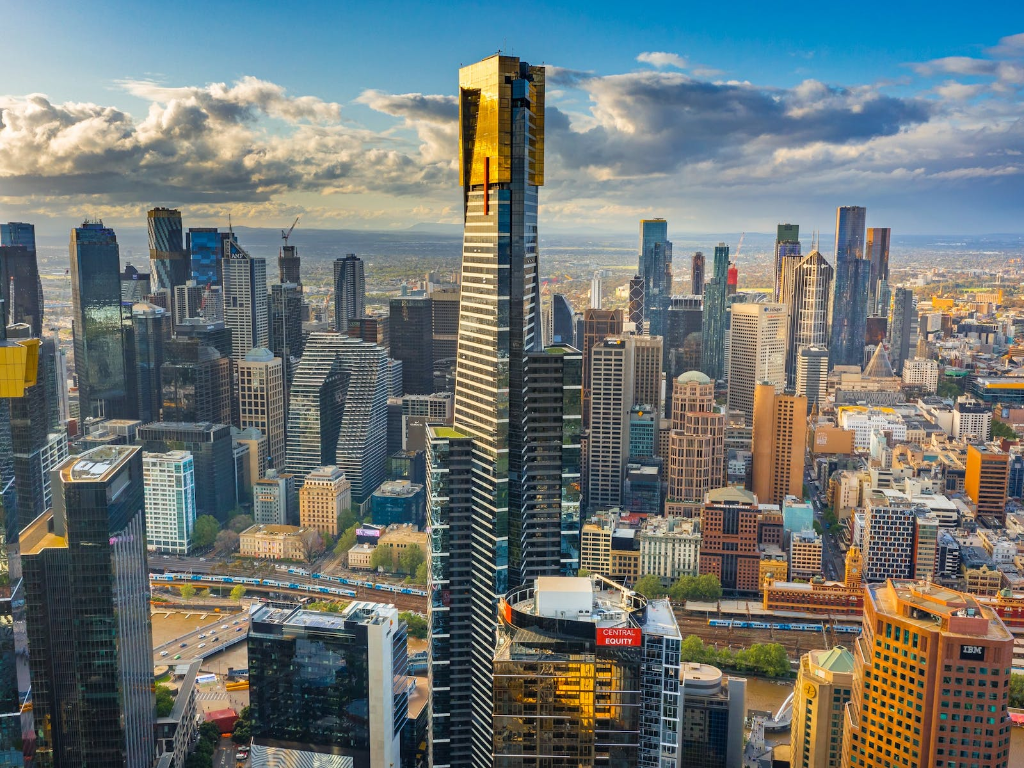
Owning Melbourne property from Singapore touches Australian tax at three points: when you buy, each year you hold, and when you sell. This guide explains each in plain English with the current 2026 figures, so you can plan with your tax agent.
Every figure below carries its source and date.
First: your tax residency
Australian tax depends on your tax residency, not your passport. If you live and work in Singapore, you will usually be a foreign resident for Australian tax purposes.
As a foreign resident:
- You pay Australian tax only on Australian-sourced income, such as rent from your Melbourne property.
- There is no tax-free threshold. Tax starts from the first dollar.
- You do not pay the Medicare levy.
If you later move to Australia and become a tax resident, different rules apply. Residency has specific tests, so confirm your status with a registered tax agent.
Taxes when you buy
These are covered in detail in our buying guide. In short, for a Victorian purchase in 2026–27:
- FIRB application fee: $15,600 for a new dwelling between $75,000 and $1 million (Treasury Schedule of Fees, 2026–27).
- General stamp duty: for example $43,070 on an $800,000 contract before any off-the-plan concession (SRO Victoria rates, 2026).
- Foreign purchaser additional duty: 8% of the dutiable value (SRO Victoria, 2026).
Keep every receipt. Stamp duty, including the foreign purchaser duty, and legal costs of buying generally form part of your cost base, which reduces your taxable gain when you sell (ATO). Ask your tax agent which other acquisition costs can be included.
Taxes while you hold the property
Income tax on rent. You lodge an Australian tax return each year and declare net rental income. Foreign resident tax rates are (ATO, 2025–26 and unchanged for 2026–27):
- 30% on taxable income up to $135,000
- 37% from $135,001 to $190,000
- 45% above $190,000
Deductions. You can claim the usual landlord expenses against rent, including:
- Interest on the loan used to buy the property
- Property management fees and letting costs
- Council rates, water charges, owners corporation fees and land tax
- Insurance and repairs
- Depreciation on the building and fittings, which can be significant for a new apartment
If expenses exceed rent, the loss can be offset against other Australian income or carried forward to future years. It cannot reduce your Singapore income.
Victorian land tax. Land tax is charged each year on the land value of your holdings. Absentee owners pay an extra 4% of taxable land value on top of general land tax (SRO Victoria, from the 2024 land tax year). From 1 January 2026, an absentee individual is someone who is not an Australian citizen or resident and was absent from Australia on 31 December of the prior year or for more than six months of it (SRO Victoria). If you are an absentee owner on 31 December, you must tell the SRO by 15 January.
Keep it occupied or rented. A foreign-owned home must be lived in or genuinely offered for rent for at least 183 days a year. Otherwise an annual vacancy fee applies, equal to double the original FIRB application fee for vacancy years starting on or after 9 April 2024 (ATO). Victoria also charges a vacant residential land tax of 1% of capital improved value in the first year, rising to 2% and then 3% for consecutive years (SRO Victoria, 2026). A tenanted property avoids both.
Taxes when you sell: capital gains
What is taxed. Your capital gain is the sale price less your cost base. The cost base includes the purchase price plus costs such as stamp duty and legal fees. Some depreciation claims reduce the cost base, so keep good records.
No 50% discount. Australian residents can halve the gain on assets held over 12 months. Foreign residents cannot use this discount for gains made after 8 May 2012 (ATO).
No main residence exemption. A foreign resident at the time of sale cannot claim the main residence exemption for sales after 30 June 2020, unless a narrow life events test is met (ATO). The CGT event date is the contract date, not settlement.
Rate. The gain is added to your Australian taxable income for the year and taxed at the foreign resident rates above.
Withholding at settlement: the 15% rule
Since 1 January 2025, the buyer of any Australian property must withhold 15% of the purchase price and pay it to the ATO, unless the seller provides a valid clearance certificate. The old $750,000 threshold no longer applies (ATO).
What this means for a Singapore-based seller:
- Clearance certificates are for Australian residents. As a foreign resident you generally cannot get one, so 15% will be withheld at settlement.
- You can apply for a variation. If the withholding would be more than your likely tax, for example because the gain is small or you have a loss, you can ask the ATO to vary the rate down, between 0% and 15% (ATO). Apply well before settlement.
- It is a prepayment, not a final tax. You lodge your Australian tax return for the year of sale, the amount withheld is credited against the tax you owe, and any excess is refunded.
A simple illustration
Say a foreign resident sells for $1,000,000 and the cost base, including stamp duty and buying costs, is $900,000.
- Amount withheld at settlement: $150,000 (15% of the price), unless a variation is approved
- Capital gain: $100,000, with no 50% discount
- Tax at foreign resident rates, if this is the only Australian income that year: $30,000
- The difference is refunded after you lodge your return
These numbers are an illustration only, not a forecast.
Bringing the money home to Singapore
Singapore has no capital gains tax, and foreign-sourced income received in Singapore by resident individuals is generally not taxed (IRAS). Australia and Singapore also have a double tax agreement. In practice, once your Australian tax is settled, the net proceeds are usually not taxed again in Singapore. If you buy and sell property often, IRAS may treat gains as trading income, so take advice if that could apply to you.
Remember the currency. You will convert AUD back to SGD, and the exchange rate at that time affects your result.
Getting your paperwork right
- Apply for an Australian tax file number as a non-resident so you can lodge returns.
- Lodge a return each year you have Australian rental income. The standard self-lodgement deadline is 31 October, and later dates apply if you use a registered tax agent.
- Use a tax agent who works with non-residents. Their fee is generally deductible.
FAQ
Do non-residents pay tax on Australian rental income?
Yes. Net rental income is taxed at foreign resident rates: 30% up to $135,000, 37% up to $190,000 and 45% above (ATO, 2025–26 and 2026–27).
Do foreign residents get the 50% CGT discount?
No, not for gains made after 8 May 2012 (ATO).
How much is withheld when a foreign resident sells?
15% of the sale price for contracts from 1 January 2025, with no minimum price threshold (ATO). You can apply for a variation, and the amount is credited when you lodge your tax return.
Can a foreign resident get a clearance certificate?
Clearance certificates are for Australian residents. A foreign resident seller can instead apply to the ATO for a variation of the withholding rate.
Will Singapore tax my Melbourne property gain?
Generally no. Singapore has no capital gains tax, and foreign-sourced income received by resident individuals is generally exempt (IRAS). Trading-style activity can be treated differently.
General information only, not tax, legal or financial advice. Speak to a registered Australian tax agent about your own situation.